
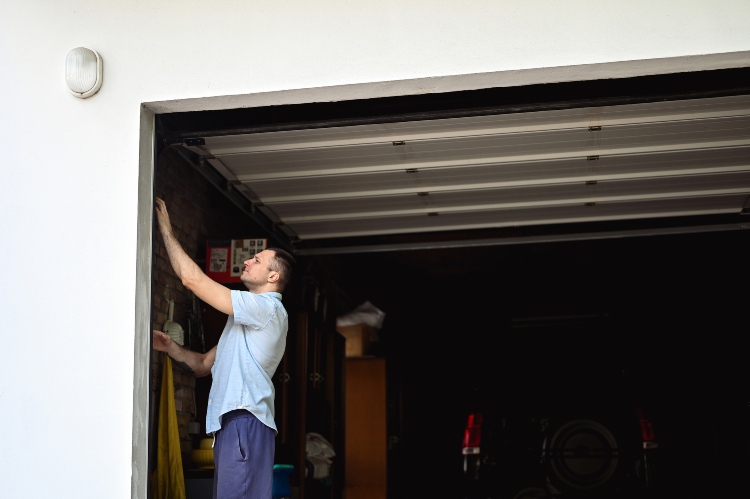
Emergency Garage Door Repair Services in San Jose, CA
Your garage door stops working, and your first instinct is to search for a quick fix on YouTube. It’s tempting, especially when a professional repair feels like an unnecessary expense. But garage door repair is one of those home improvement tasks that looks simple on the surface but quickly reveals itself to be anything but. As you read below, we’ll cover the real risks of DIY garage door repair, which repairs should always be left to a licensed technician, what you can safely handle yourself, and when it’s time to make that call. By the end, you’ll have a clear picture of what’s at stake and what to do about it. If you need an emergency garage door repair, contact Cal’s Garage Doors™ today.
Why DIY Garage Door Repair is Dangerous
Garage doors are the largest moving parts in most homes. A standard two-car garage door weighs anywhere from 150 to 300 pounds, and the springs, cables, and tracks that move it are under enormous tension. One wrong move can result in serious injury or worse. Here’s why DIY repairs can be risky:
- Torsion Springs Are Under Extreme Pressure: The torsion spring above your garage door stores hundreds of pounds of mechanical energy. When a spring breaks, it releases that energy instantly. Technicians who work with these springs use specialized tools and follow strict safety protocols for a reason. Without them, a snapped spring can cause severe lacerations or broken bones in a fraction of a second.
- Electrical Components Pose Shock Hazards: Modern garage door openers are wired directly into your home’s electrical system. Tampering with wiring, sensors, or motor components without proper training can lead to electrical shocks, short circuits, or fire hazards.
- Falling Doors Are a Real Risk: A garage door that isn’t properly secured during a repair can fall without warning. At that weight, a falling door can cause crush injuries or significant property damage. Professionals use locking pliers and other safety tools to prevent this.
Common Repairs You Should Not DIY
Some garage door problems might look manageable from the outside. These are the repairs that most often deceive homeowners and where mistakes can be the costliest. You should leave the following for the professionals:
- Garage Door Spring Repair: Garage door spring repair is the most hazardous task on this list. Both torsion and extension springs operate under high tension. Replacing them requires specific tools, technical knowledge, and an understanding of how to safely release tension before beginning any work. This is not a job for the uninitiated.
- Garage Door Cable Repair: Cables work in tandem with your springs to lift and lower the door. A frayed or snapped cable is a sign that the entire system is stressed. DIY garage door cable repair is particularly risky because cables remain under tension even after a spring has broken. This is a detail many homeowners don’t realize until it’s too late.
- Overhead Garage Door Repair: Overhead garage door repair involves working at height with heavy components. Misaligned tracks, bent panels, or damaged rollers may seem like straightforward fixes, but improper repairs can cause the door to jump its tracks or fall during operation.
- Opener and Motor Repairs: Garage door openers involve a combination of electrical wiring and mechanical components. Adjusting motor force, limit switches, or internal boards should always be handled by a certified technician.
Garage Door Maintenance & Repairs You Can DIY Safely
Not everything requires a professional. There are several low-risk tasks that homeowners in San Jose, CA can safely perform to keep their garage doors running smoothly.
- Lubricating Moving Parts: Apply a silicone-based lubricant to the rollers, hinges, and tracks every six months. Avoid WD-40, as it attracts dirt and can degrade rubber components over time.
- Cleaning and Aligning Photo-Eye Sensors: The two small sensors near the bottom of your garage door frame can get dirty or knocked out of alignment. Clean them with a soft cloth and adjust their angle until the indicator lights are solid (not blinking).
- Tightening Loose Hardware: Vibration from daily use can loosen bolts and screws over time. A visual inspection and a quick tighten with a socket wrench every few months is a simple way to catch issues early.
- Testing the Auto-Reverse Function: Place a flat object (like a 2×4) on the ground beneath the door. If the door doesn’t reverse immediately upon contact, the sensitivity needs to be adjusted. This is a call to your technician.
- Replacing Weather Stripping: The rubber seal along the bottom of your door is easy to replace and helps keep out dust, pests, and moisture. Replacement strips are widely available at hardware stores.
Signs You Need to Call a Professional Immediately
Some issues can wait until a scheduled appointment. Others can’t. Reach out for emergency garage door repair if you notice any of the following:
- A broken or visibly snapped spring: The door will likely be inoperable, and attempting to force it open manually can cause additional damage or injury.
- A cable that’s hanging loose or off the drum: This indicates the lifting system has failed, and the door is no longer safely supported.
- The door is off its tracks: A door that has jumped its tracks is unstable and dangerous to operate.
- Unusual grinding or scraping sounds: These can signal serious mechanical problems that will worsen without attention.
- The door won’t fully open or close: This could point to a sensor issue, a broken spring, or a failing opener, all of which require professional diagnosis.
Benefits of Hiring a Professional
Beyond safety, there are practical advantages to calling a qualified professional for your garage door repair.
- Accurate Diagnosis: Garage door problems often have underlying causes that aren’t visible to the untrained eye. A professional can identify the root issue quickly, rather than treating symptoms.
- Proper Tools and Parts: Technicians arrive with the right equipment and access to quality parts. DIY repairs often rely on generic components that don’t meet your system’s specifications.
- Warranty Protection: Many garage door manufacturers will void your warranty if an unqualified person makes repairs. Professional repairs preserve your coverage.
- Long-Term Cost Savings: A professional repair done right the first time costs far less than fixing a DIY job gone wrong, especially when that mistake results in a full door replacement or, worse, an injury.
- Speed and Convenience: An experienced technician can complete most standard repairs in a single visit. What might take a homeowner an entire weekend (with uncertain results) gets resolved in a few hours.
Know When to Step Back
Garage doors and repair work go hand in hand, and it’s natural to want to handle things yourself. But the mechanical and electrical complexity of a modern garage door system means that certain repairs carry risks that simply aren’t worth taking. For routine maintenance, clean those sensors and lubricate those hinges. But when something breaks, or when you’re not certain what you’re dealing with, the smart move is to call a professional. Cal’s Garage Doors™ serves homeowners throughout San Jose, CA, handling everything from routine maintenance to emergency garage door repair. Whether you’re dealing with a broken spring, a cable off the drum, or a door that simply won’t budge, our team is ready to help. Contact us today to schedule a repair.